
The Brown-headed Cowbird (Molothrus ater) is a small blackbird native to North America, known for its unique brood parasitic behavior. Unlike most birds, cowbirds do not build their own nests or raise their young. Instead, they lay their eggs in the nests of other bird species, leaving the unsuspecting hosts to incubate and care for the cowbird chicks. This behavior has significant ecological implications, often impacting the reproductive success of host species. Culturally, the cowbird is sometimes viewed negatively due to its parasitic habits, but it plays a complex role in its ecosystem.
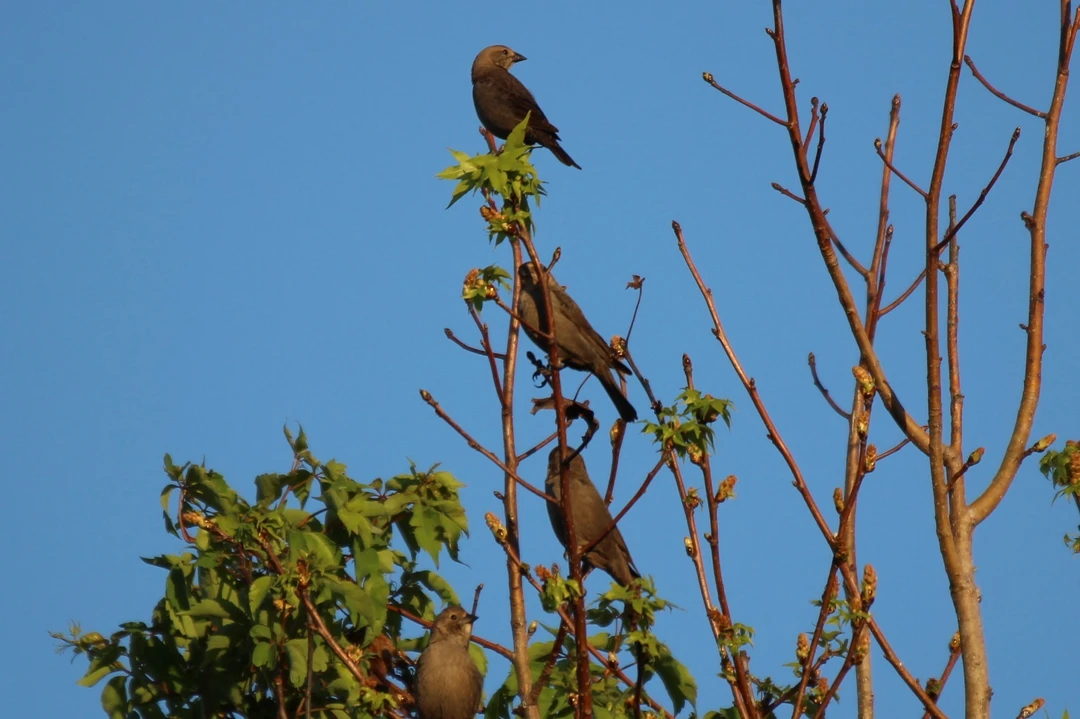
Photos of Brown-headed Cowbird
Compare plumage, posture, and field context across this image set.
Brown-headed Cowbird sounds
Listen to a small selection of reference recordings.
About the Brown-headed Cowbird
The Brown-headed Cowbird (Molothrus ater) is a small blackbird native to North America, known for its unique brood parasitic behavior. Unlike most birds, cowbirds do not build their own nests or raise their young. Instead, they lay their eggs in the nests of other bird species, leaving the unsuspecting hosts to incubate and care for the cowbird chicks. This behavior has significant ecological implications, often impacting the reproductive success of host species. Culturally, the cowbird is sometimes viewed negatively due to its parasitic habits, but it plays a complex role in its ecosystem.
Also known as: Cow-pen Bird, Cow Bunting.
Scientific classification
Phylum: Chordata
Clazz: Aves
Order: Passeriformes
Family: Icteridae
Genus: Molothrus
Species: Molothrus ater
Habitat and distribution
Adaptations: Cowbirds have adapted to a wide range of habitats, demonstrating flexibility in their foraging and breeding strategies. Their ability to utilize various host species for raising their young allows them to thrive in diverse environments.
Variations: There are three recognized subspecies of the Brown-headed Cowbird, distinguished primarily by subtle differences in size and coloration. These variations are often associated with geographic location.
Distribution: The Brown-headed Cowbird is found throughout North America, ranging from southern Canada to Mexico. It is a migratory species, with northern populations moving south for the winter. They can be found in various habitats, with a preference for edge habitats and open areas.
Habitat Types: Grasslands, Agricultural fields, Forest edges, Open woodlands, Suburban areas
Climate Zones: Temperate, Subtropical
Diet and feeding
Primary foods: Seeds, Insects, Grains
Foraging behavior: Cowbirds often forage on the ground, walking or running to pick up seeds and insects. They are also known to follow grazing animals, catching insects disturbed by their movement.
Seasonal diet variations: Their diet shifts with the seasons. Insects are more prevalent in the diet during the breeding season, while seeds and grains dominate in the winter.
Specializations: Their strong, conical bill is well-suited for cracking seeds, but they are also adept at catching insects.
Reproduction and lifecycle
Breeding season: The breeding season typically occurs from May to August.
Regional variations: The breeding season may start slightly earlier in southern regions.
Courtship rituals: Male cowbirds display by puffing up their feathers, spreading their wings, and bowing deeply while producing a gurgling song.
Nest Type: Cowbirds do not build nests; they are obligate brood parasites.
Parental care: Cowbirds provide no parental care. Host parents incubate the eggs and raise the chicks.
Fledging period: Cowbird chicks typically fledge 10-14 days after hatching, often earlier than the host's young.
Clutch Size: Females can lay up to 40 eggs per season, one egg per host nest.
Physical characteristics
Sex-Based Plumage Differences: Males are slightly larger than females.
Length: 16-22 cm
Wingspan: 30-36 cm
Weight: 38-50 g
Lifespan: The average lifespan in the wild is about 2-3 years, though some individuals can live longer.
Breeding Plumage: During the breeding season, males have a glossy black body with a brown head. Females are a dull gray-brown overall. Non-breeding plumage is similar, but slightly duller.
Seasonal Feather Changes: There is minimal seasonal variation beyond the slightly duller non-breeding plumage.
Notable features: Short, conical bill, Dark eyes, Sturdy legs
Interesting facts
Cowbirds are North America's most common obligate brood parasite.: This means they exclusively rely on other species to raise their young.
Female cowbirds can lay eggs in the nests of over 220 different bird species.: This wide range of hosts contributes to their success.
Cowbird chicks often hatch earlier and grow faster than host chicks.: This gives them a competitive advantage, often resulting in the detriment of the host's offspring.
Frequently asked questions
Why do cowbirds lay their eggs in other birds' nests?
This behavior, known as brood parasitism, allows cowbirds to reproduce without expending energy on nest building and parental care.
Do host birds ever reject cowbird eggs?
Some host species have evolved the ability to recognize and reject cowbird eggs, but many others accept them.
Are cowbirds bad for other bird populations?
Cowbird parasitism can negatively impact the reproductive success of some host species, particularly those with small populations or specialized nesting requirements.
Are brown-headed cowbirds protected?
Yes. Brown-headed cowbirds, like other migratory birds, are protected under the Migratory Bird Treaty Act.
Compare the image, sound, habitat, and physical characteristics together when reviewing a sighting.