
The Eurasian Blue Tit (Cyanistes caeruleus) is a small, vibrant passerine bird widely recognized for its striking blue and yellow plumage. It is a common sight in gardens, woodlands, and parks across Europe and parts of the Middle East. This adaptable bird plays a crucial role in controlling insect populations, particularly caterpillars, making it beneficial to both natural ecosystems and human agriculture. While not holding any major cultural significance comparable to some other bird species, the Blue Tit's cheerful presence and readily observable behavior make it a popular subject for birdwatchers and a symbol of the changing seasons in many European countries.
Photos of Blue Tit
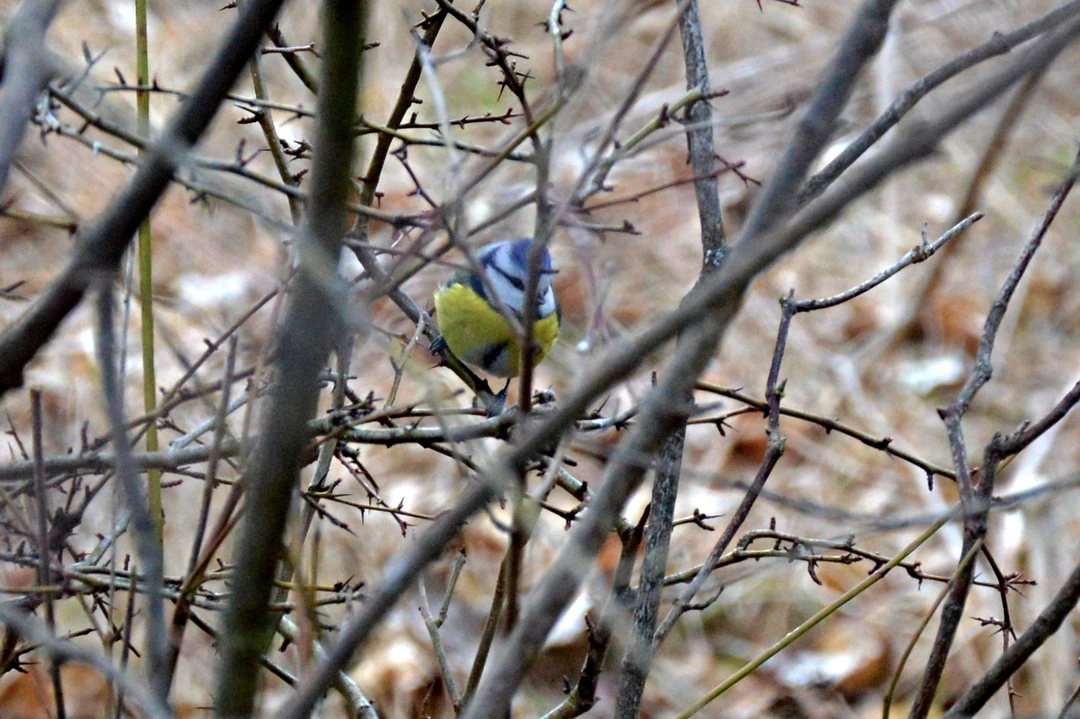
Compare plumage, posture, and field context across this image set.
About the Blue Tit
The Eurasian Blue Tit (Cyanistes caeruleus) is a small, vibrant passerine bird widely recognized for its striking blue and yellow plumage. It is a common sight in gardens, woodlands, and parks across Europe and parts of the Middle East. This adaptable bird plays a crucial role in controlling insect populations, particularly caterpillars, making it beneficial to both natural ecosystems and human agriculture. While not holding any major cultural significance comparable to some other bird species, the Blue Tit's cheerful presence and readily observable behavior make it a popular subject for birdwatchers and a symbol of the changing seasons in many European countries.
Also known as: Eurasian Blue Tit, European Blue Tit.
Scientific classification
Phylum: Chordata
Clazz: Aves
Order: Passeriformes
Family: Paridae
Genus: Cyanistes
Species: Cyanistes caeruleus
Habitat and distribution
Adaptations: Blue Tits are highly adaptable to a variety of wooded habitats. Their small size and agility allow them to forage effectively in dense foliage. They have strong claws for gripping branches and are adept at hanging upside down to access food.
Variations: Several subspecies of the Eurasian Blue Tit are recognized, differing slightly in plumage coloration and size. For example, populations in North Africa tend to have a darker blue cap and a more extensive black band across the eye.
Distribution: The Eurasian Blue Tit is found throughout Europe, extending eastward into parts of the Middle East and western Russia. Its range includes the British Isles, most of mainland Europe, and parts of Turkey, Iran, and the Caucasus region. It is largely non-migratory, though some northern populations may move south for the winter. Altitudinally, it can be found from sea level up to subalpine zones.
Habitat Types: Deciduous woodlands, Mixed forests, Parks, Gardens, Hedgerows
Climate Zones: Temperate, Mediterranean
Diet and feeding
Primary foods: Insects, Caterpillars, Spiders, Seeds, Berries
Foraging behavior: Blue Tits are active foragers, flitting through branches and foliage in search of food. They are acrobatic, often hanging upside down to reach insects and spiders. They also readily visit bird feeders, especially in winter.
Seasonal diet variations: During the breeding season, their diet consists mainly of insects and caterpillars, which are essential for feeding their young. In winter, they shift to a more seed and berry-based diet when insects are scarce.
Specializations: Their small, pointed beaks are well-suited for picking insects from crevices and leaves. They also have strong feet for clinging to branches.
Reproduction and lifecycle
Breeding season: The breeding season typically occurs from April to June, though it can vary slightly depending on location and weather conditions.
Regional variations: In southern Europe, breeding may start earlier than in northern regions.
Courtship rituals: Courtship involves the male displaying to the female by raising his crown feathers, drooping his wings, and making soft calls. He may also offer food to the female.
Nest Type: Cavity nester, using natural holes in trees or nest boxes.
Nesting Materials: Moss, Grass, Feathers, Animal hair
Parental care: Both parents share the responsibility of incubating the eggs and feeding the chicks. The female incubates the eggs for about 12-16 days. The chicks are altricial (helpless at hatching) and are fed by both parents.
Fledging period: The chicks fledge (leave the nest) after about 18-21 days.
Clutch Size: Typically 7-13 eggs, but can range from 5 to 19.
Physical characteristics
Sex-Based Plumage Differences: Minimal
Length: 10.5-12 cm
Wingspan: 17.5-20 cm
Weight: 8-12 g
Lifespan: The average lifespan in the wild is around 2-3 years, although some individuals can live longer. In captivity with no predators, they can live up to 10 years.
Breeding Plumage: Plumage is generally similar year-round, but breeding birds may have slightly brighter colors.
Seasonal Feather Changes: Minimal seasonal variation, molting occurs after the breeding season.
Notable features: Bright blue cap and wings, Yellow breast and belly, Black eye stripe, White cheeks, Small, black bib
Interesting facts
Blue Tits are known for their intelligence and problem-solving abilities.: They have been observed to learn how to open milk bottles to access the cream.
The blue color in their feathers is structural, not pigment-based.: Tiny structures in the feathers scatter light, creating the blue appearance.
They are important predators of oak gall wasps.: By consuming these wasps, they help to protect oak trees.
Frequently asked questions
What do Blue Tits eat?
They eat a variety of insects, caterpillars, spiders, seeds, and berries. Their diet changes with the seasons.
Where do Blue Tits nest?
They nest in cavities, such as holes in trees or nest boxes. They line their nests with soft materials like moss, grass, and feathers.
Are Blue Tits migratory?
Most populations are resident, but some northern populations may move short distances in winter.
How long do Blue Tits live?
The average lifespan in the wild is 2-3 years.
Compare the image, sound, habitat, and physical characteristics together when reviewing a sighting.