
The Black-capped Chickadee (Poecile atricapillus) is a small, energetic songbird widespread across North America. Known for its distinctive 'chick-a-dee-dee-dee' call, this species plays a vital role in controlling insect populations. It's also admired for its remarkable memory, allowing it to cache food in thousands of locations and retrieve it months later. Culturally, the Black-capped Chickadee is often seen as a symbol of cheerfulness and resilience in the face of harsh winter conditions.
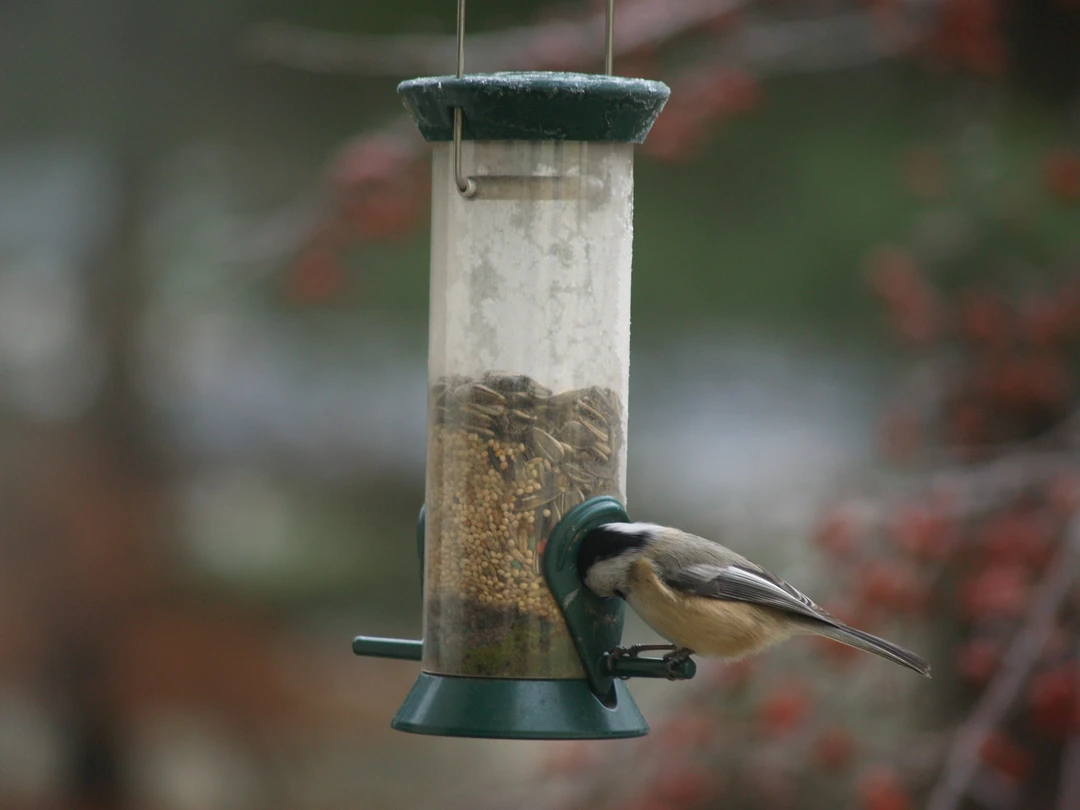
Photos of Black-capped Chickadee
Compare plumage, posture, and field context across this image set.
Black-capped Chickadee sounds
Listen to a small selection of reference recordings.
About the Black-capped Chickadee
The Black-capped Chickadee (Poecile atricapillus) is a small, energetic songbird widespread across North America. Known for its distinctive 'chick-a-dee-dee-dee' call, this species plays a vital role in controlling insect populations. It's also admired for its remarkable memory, allowing it to cache food in thousands of locations and retrieve it months later. Culturally, the Black-capped Chickadee is often seen as a symbol of cheerfulness and resilience in the face of harsh winter conditions.
Also known as: Northern Chickadee.
Scientific classification
Phylum: Chordata
Clazz: Aves
Order: Passeriformes
Family: Paridae
Genus: Poecile
Species: Poecile atricapillus
Habitat and distribution
Adaptations: They are well-adapted to cold climates, possessing dense, insulating feathers and the ability to lower their body temperature at night (nocturnal hypothermia) to conserve energy.
Variations: Several subspecies are recognized, differing slightly in plumage and song, primarily based on geographic location.
Distribution: Found across North America, from Alaska and southern Canada to the northern half of the United States. It is generally non-migratory, though some populations may move short distances south within their range in winter.
Habitat Types: Deciduous forests, Mixed forests, Open woodlands, Parks, Suburban areas with trees
Climate Zones: Temperate, Boreal
Diet and feeding
Primary foods: Insects, Spiders, Seeds, Berries
Foraging behavior: Actively gleans insects and spiders from leaves and branches. Also hovers briefly to pick food from surfaces. Known for caching food items in numerous locations.
Seasonal diet variations: Diet shifts with seasonal availability. Insects and spiders are dominant in summer, while seeds and berries are more important in winter.
Specializations: Excellent spatial memory allows them to remember the locations of thousands of cached food items.
Reproduction and lifecycle
Breeding season: Late spring to early summer (April-July).
Regional variations: Slight variations depending on latitude and local climate conditions.
Courtship rituals: Males perform courtship displays, including singing, chasing, and offering food to the female.
Nest Type: Cavity nester, using natural tree cavities or old woodpecker holes. Will also use nest boxes.
Nesting Materials: Moss, Animal fur, Plant fibers
Parental care: Both parents incubate the eggs (primarily the female) and feed the chicks.
Fledging period: About 16 days until fledging.
Clutch Size: Typically 6-8 eggs.
Physical characteristics
Sex-Based Plumage Differences: Minimal
Length: 12-15 cm
Wingspan: 16-21 cm
Weight: 9-14 g
Lifespan: Average 2-3 years in the wild; up to 10 years in captivity.
Breeding Plumage: Plumage remains similar year-round.
Seasonal Feather Changes: None
Notable features: Black cap and bib, White cheeks, Gray back, wings, and tail, Buffy flanks
Interesting facts
They can remember thousands of hiding spots for food.: This incredible spatial memory is crucial for surviving harsh winters.
Their brain grows new neurons each fall.: This neurogenesis helps them update their mental maps for caching food.
Different number of 'dee' notes indicate threat.: More 'dee' notes in their 'chick-a-dee' call indicates a higher level of threat from a predator.
Frequently asked questions
What do Black-capped Chickadees eat?
They eat a mix of insects, spiders, seeds, and berries, varying their diet with the seasons.
Do Black-capped Chickadees migrate?
They are generally non-migratory, but some may move short distances in winter.
Where do Black-capped Chickadees nest?
They nest in tree cavities, old woodpecker holes, or nest boxes.
How can I attract Black-capped Chickadees to my yard?
Provide a source of fresh water, offer sunflower seeds, suet, or peanuts in feeders, and install nest boxes.
Compare the image, sound, habitat, and physical characteristics together when reviewing a sighting.