
The American Robin (Turdus migratorius) is a ubiquitous and beloved songbird found throughout North America. Known for its cheerful song and bright red breast, it's a familiar sight in gardens, parks, and woodlands. The robin plays a vital ecological role as a seed disperser and consumer of invertebrates, contributing to the health of various ecosystems. While not typically considered culturally significant in the same way as some other birds, its association with springtime and renewal has made it a popular symbol in folklore and literature.
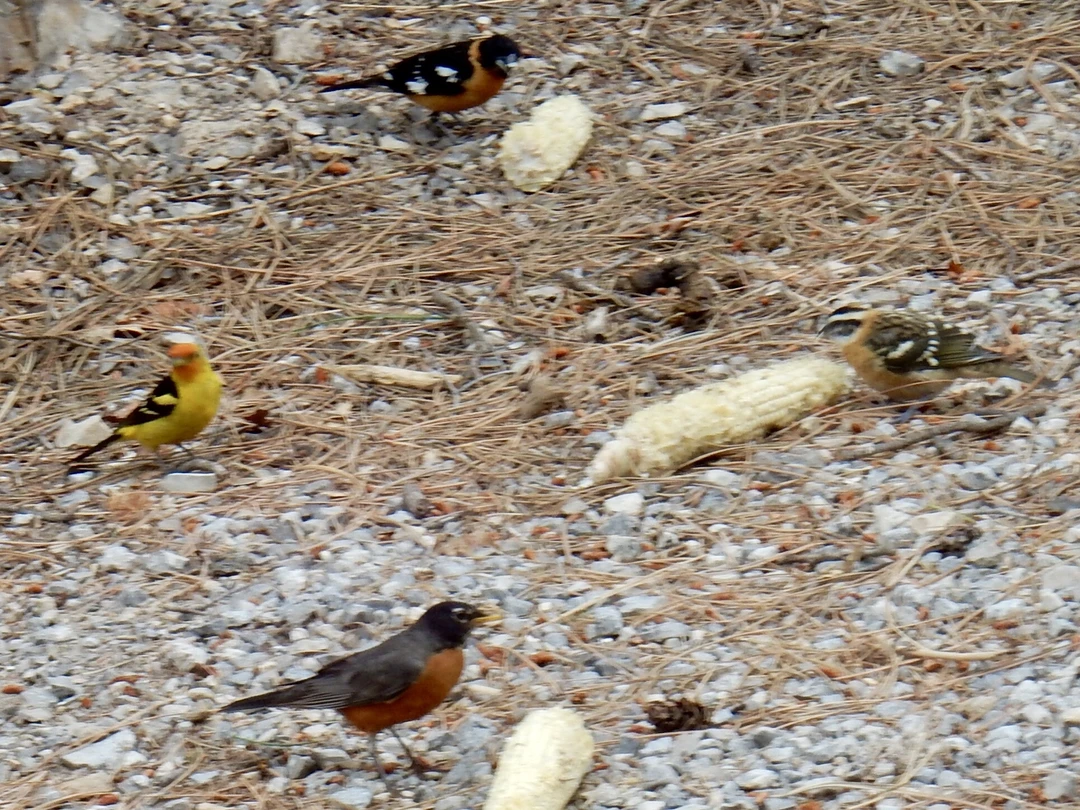
Photos of American Robin
Compare plumage, posture, and field context across this image set.
American Robin sounds
Listen to a small selection of reference recordings.
About the American Robin
The American Robin (Turdus migratorius) is a ubiquitous and beloved songbird found throughout North America. Known for its cheerful song and bright red breast, it's a familiar sight in gardens, parks, and woodlands. The robin plays a vital ecological role as a seed disperser and consumer of invertebrates, contributing to the health of various ecosystems. While not typically considered culturally significant in the same way as some other birds, its association with springtime and renewal has made it a popular symbol in folklore and literature.
Also known as: Red-breasted Thrush, Robin Redbreast.
Scientific classification
Phylum: Chordata
Clazz: Aves
Order: Passeriformes
Family: Turdidae
Genus: Turdus
Species: Turdus migratorius
Habitat and distribution
Adaptations: American Robins are highly adaptable to various habitats, thriving in both natural and human-altered environments. Their ability to utilize a diverse range of food sources contributes to their success.
Variations: Seven subspecies of the American Robin are recognized, differing slightly in size and plumage coloration. These variations are often subtle and related to geographic location.
Distribution: The American Robin has a wide range, breeding from Alaska and Canada south to Mexico and the Gulf Coast. It is migratory, with northern populations moving south for the winter. They can be found at elevations from sea level to above 10,000 feet.
Habitat Types: Forests, Woodlands, Parks, Gardens, Fields, Suburban areas
Climate Zones: Temperate, Subarctic, Subtropical
Diet and feeding
Primary foods: Earthworms, Insects, Fruits, Berries
Foraging behavior: American Robins often forage on the ground, hopping and running, then pausing to look and listen for prey. They are known for pulling earthworms from the soil.
Seasonal diet variations: Their diet shifts with the seasons. In spring and summer, they primarily eat earthworms and insects, while in fall and winter, they consume more fruits and berries.
Specializations: They have excellent eyesight and hearing, which aids in locating prey beneath the soil surface.
Reproduction and lifecycle
Breeding season: The breeding season typically occurs from April through July.
Regional variations: Breeding may start earlier in the southern parts of their range.
Courtship rituals: Males sing to attract females and defend territories. Courtship displays include wing-drooping, tail-spreading, and offering food to the female.
Nest Type: Cup-shaped nest built in trees, shrubs, or on human-made structures.
Nesting Materials: Twigs, Grass, Mud, Paper, Feathers
Parental care: Both parents share incubation duties, which last about 12-14 days. Both parents also feed the chicks, which fledge about 13 days after hatching.
Fledging period: Approximately 2 weeks until the young birds can fly.
Clutch Size: Typically 3-5 eggs per clutch.
Physical characteristics
Sex-Based Plumage Differences: Minimal
Length: 23-28 cm
Wingspan: 31-41 cm
Weight: 72-94 g
Lifespan: The average lifespan in the wild is about 2 years, although some individuals have been recorded living over 10 years.
Breeding Plumage: Plumage is generally consistent year-round, although it may appear slightly duller in the non-breeding season.
Seasonal Feather Changes: Minor variations, mainly in the intensity of coloration.
Notable features: Bright red-orange breast, Dark gray to black head and back, White eye-ring (broken), Yellow bill with a dark tip
Interesting facts
American Robins can produce multiple broods in a single breeding season.: This allows them to maximize reproductive success, especially in favorable conditions.
They are one of the earliest songbirds to sing in the morning.: Their dawn chorus is a familiar sound in many areas.
Robins often use mud to reinforce their nests.: This helps create a sturdy and durable structure.
American robins sometimes become intoxicated.: This happens when they consume overripe berries that have begun to ferment.
Frequently asked questions
What do I do if I find a baby robin?
If the bird is injured or in immediate danger, contact a local wildlife rehabilitator. If it appears healthy and is feathered, it's likely a fledgling and its parents are nearby. It's best to leave it alone.
Why do robins hop instead of walk?
Hopping is an efficient way for them to move across the ground while searching for food. It allows them to quickly change direction and scan for prey.
Are American Robins attracted to bird feeders?
While they may occasionally visit feeders, they prefer to forage on the ground. Offering mealworms or fruit may be more successful in attracting them.
Do American Robins return to the same nest?
While American Robins do not typically use the exact same nest in subsequent years, they will frequently build a new nest near a prior nesting location.
Compare the image, sound, habitat, and physical characteristics together when reviewing a sighting.