
The American Goldfinch (Spinus tristis) is a vibrant, small songbird common throughout North America. Known for its bright yellow plumage during the breeding season, it's a welcome sight in gardens and fields. These birds play a crucial role in seed dispersal and are highly adapted to feeding on thistle and other seeds. Culturally, the American Goldfinch is the state bird of New Jersey, Iowa, and Washington, symbolizing a connection to nature and the beauty of the changing seasons.
Photos of American Goldfinch
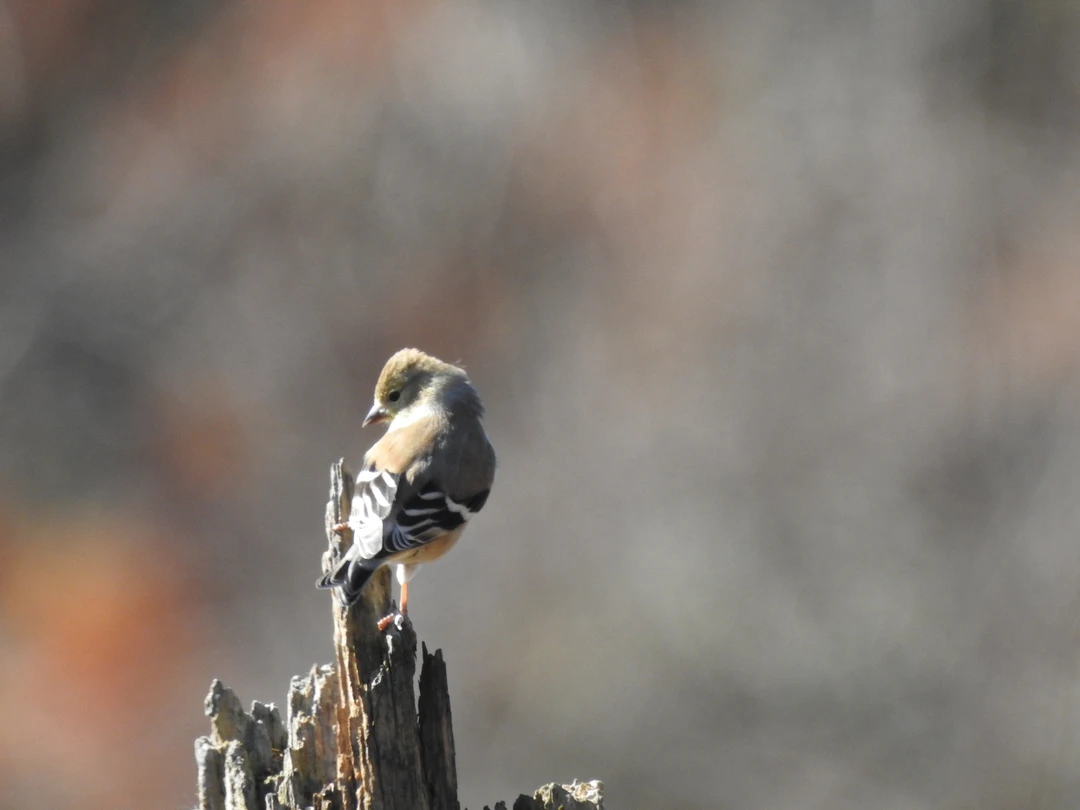
Compare plumage, posture, and field context across this image set.
American Goldfinch sounds
Listen to a small selection of reference recordings.
About the American Goldfinch
The American Goldfinch (Spinus tristis) is a vibrant, small songbird common throughout North America. Known for its bright yellow plumage during the breeding season, it's a welcome sight in gardens and fields. These birds play a crucial role in seed dispersal and are highly adapted to feeding on thistle and other seeds. Culturally, the American Goldfinch is the state bird of New Jersey, Iowa, and Washington, symbolizing a connection to nature and the beauty of the changing seasons.
Also known as: Goldfinch.
Scientific classification
Phylum: Chordata
Clazz: Aves
Order: Passeriformes
Family: Fringillidae
Genus: Spinus
Species: Spinus tristis
Habitat and distribution
Adaptations: American Goldfinches thrive in disturbed habitats with weedy plants. Their small size and agility allow them to cling to seed heads, and their conical beaks are specialized for extracting seeds.
Variations: Several subspecies exist, differing slightly in size and plumage coloration. These variations are generally subtle and related to geographic location.
Distribution: The American Goldfinch is found across North America. Breeding ranges extend from southern Canada to the southern United States. During winter, northern populations migrate south, reaching as far as Mexico. They are altitudinally flexible, occupying various elevations.
Habitat Types: Open woodlands, Fields, Meadows, Roadsides, Gardens, Orchards
Climate Zones: Temperate, Subtropical
Diet and feeding
Primary foods: Seeds, Thistle seeds, Nyjer seeds, Sunflower seeds, Small insects (especially during breeding season)
Foraging behavior: American Goldfinches are acrobatic feeders, often clinging to seed heads and extracting seeds with their beaks. They are also frequent visitors to bird feeders.
Seasonal diet variations: The diet is primarily seeds year-round, but insects become a more significant component during the breeding season to provide protein for growing chicks.
Specializations: Their conical beak is perfectly adapted for extracting seeds from composite flowers like thistles and sunflowers.
Reproduction and lifecycle
Breeding season: Late summer (July-September), later than many other songbirds, coinciding with the peak availability of thistle seeds.
Regional variations: Slight variations based on latitude and local seed availability.
Courtship rituals: Males perform flight displays and sing to attract females. Courtship feeding, where the male feeds the female, is also common.
Nest Type: Cup nest built in a shrub or tree.
Nesting Materials: Plant fibers, Down, Spider silk
Parental care: Both parents feed the chicks, initially with regurgitated insects and later with seeds.
Fledging period: 11-17 days until first flight.
Clutch Size: 4-6 eggs
Physical characteristics
Sex-Based Plumage Differences: Minimal
Length: 11-14 cm
Wingspan: 19-22 cm
Weight: 11-20 g
Lifespan: Typically 3-7 years in the wild, though some individuals may live longer.
Breeding Plumage: Breeding males are bright yellow with a black forehead, black wings with white markings, and a white rump. Females are duller yellow-brown. Non-breeding males and females are drab olive-brown.
Seasonal Feather Changes: Significant seasonal changes occur, with males molting into their bright breeding plumage in late winter or early spring and back to a duller plumage in the fall.
Notable features: Conical beak, Black wings with white wing bars, Black forehead in breeding males
Interesting facts
They are one of the latest-nesting songbirds in North America.: This is due to their reliance on thistle seeds, which become abundant later in the summer.
They use spider silk and plant down to build their nests.: This creates a soft, tightly woven cup that can hold the eggs securely.
Males molt their bright yellow plumage twice a year.: They have a complete molt after breeding and a partial molt before breeding.
Frequently asked questions
What should I feed American Goldfinches?
Offer Nyjer (thistle) seeds, sunflower seeds, and keep a clean birdbath available.
Why are they sometimes called 'wild canaries'?
This nickname refers to the bright yellow plumage of breeding males, which resembles that of a canary.
Do American Goldfinches migrate?
Yes, northern populations migrate south for the winter, while some southern populations are resident.
How can I attract American Goldfinches to my yard?
Plant native thistles, sunflowers, and other seed-bearing plants, and provide a source of fresh water.
Compare the image, sound, habitat, and physical characteristics together when reviewing a sighting.