
The American Crow (Corvus brachyrhynchos) is a highly intelligent and adaptable bird species widespread across North America. Known for their distinctive 'caw-caw' calls, these birds play a significant role in various ecosystems, acting as scavengers, predators, and seed dispersers. They are also culturally significant, often appearing in folklore and literature, sometimes symbolizing intelligence, adaptability, or even as omens. Their ability to solve complex problems and recognize individual human faces has fascinated researchers and bird enthusiasts alike.
Photos of American Crow
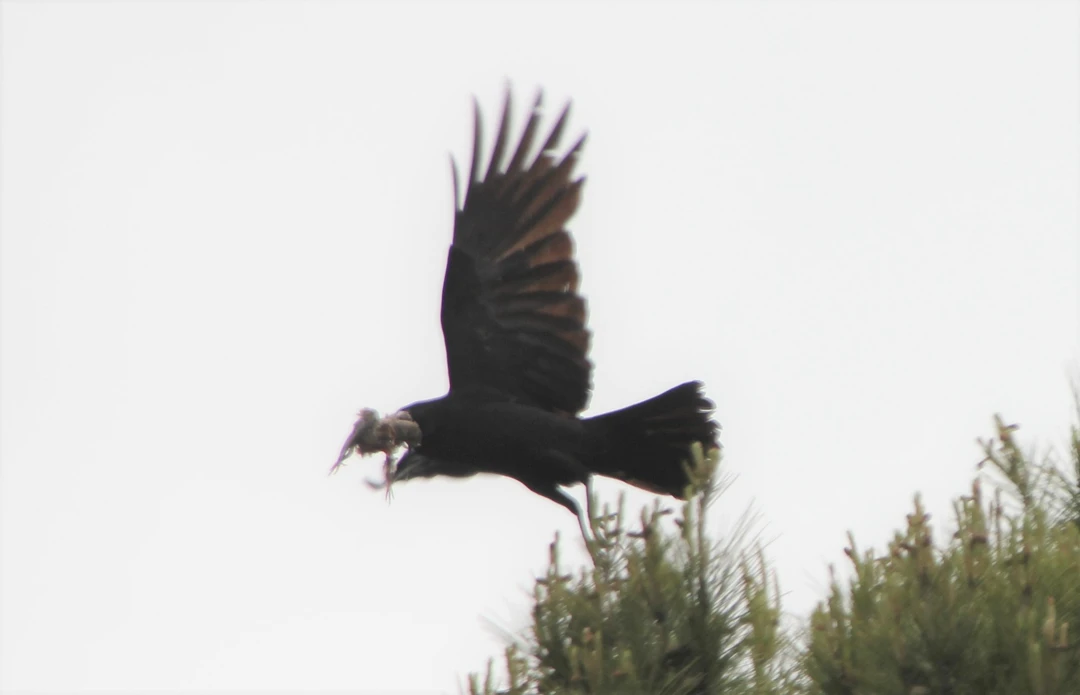
Compare plumage, posture, and field context across this image set.
American Crow sounds
Listen to a small selection of reference recordings.
About the American Crow
The American Crow (Corvus brachyrhynchos) is a highly intelligent and adaptable bird species widespread across North America. Known for their distinctive 'caw-caw' calls, these birds play a significant role in various ecosystems, acting as scavengers, predators, and seed dispersers. They are also culturally significant, often appearing in folklore and literature, sometimes symbolizing intelligence, adaptability, or even as omens. Their ability to solve complex problems and recognize individual human faces has fascinated researchers and bird enthusiasts alike.
Scientific classification
Phylum: Chordata
Clazz: Aves
Order: Passeriformes
Family: Corvidae
Genus: Corvus
Species: Corvus brachyrhynchos
Habitat and distribution
Adaptations: American Crows are highly adaptable to a wide range of habitats. Their generalized diet and opportunistic foraging behavior allow them to thrive in diverse environments. They are also behaviorally flexible, adjusting their social structure and nesting habits based on resource availability and human presence.
Variations: Several subspecies are recognized, differing slightly in size and vocalizations. For example, the Northwestern Crow (*Corvus caurinus*) is sometimes considered a separate species, but is increasingly treated as a subspecies of the American Crow.
Distribution: The American Crow is found throughout North America, from Canada to northern Mexico. They are absent from the extreme Arctic regions and some parts of the southwestern desert. Some populations are migratory, with northern birds moving south for the winter, while others are year-round residents.
Habitat Types: Open woodlands, Farmlands, Urban areas, Suburban areas, Forests, Grasslands, Coastal areas
Climate Zones: Temperate, Subtropical, Boreal
Diet and feeding
Primary foods: Insects, Seeds, Grains, Fruits, Nuts, Carrion, Small animals (e.g., mice, frogs), Bird eggs and nestlings, Human garbage
Foraging behavior: American Crows are opportunistic omnivores and forage in a variety of ways. They often walk on the ground, probing for insects and seeds. They also cache food, hiding it in various locations for later retrieval. They are known to use tools, such as sticks, to extract insects from crevices.
Seasonal diet variations: Diet varies seasonally depending on food availability. In winter, they may rely more on grains, nuts, and carrion. During the breeding season, insects and other protein-rich foods are important for feeding young.
Specializations: Their strong bill is adapted for a wide range of food items, allowing them to crack nuts, probe soil, and tear carrion. Their intelligence and adaptability are key to their foraging success.
Reproduction and lifecycle
Breeding season: Breeding season typically occurs in spring, from March to June, but can vary depending on location.
Regional variations: Breeding may start earlier in southern regions and later in northern latitudes.
Courtship rituals: Courtship involves displays such as bowing, fluffing feathers, and offering food to the potential mate. Crows are generally monogamous and form long-term pair bonds.
Nest Type: A large, bulky cup nest built in trees or, occasionally, on utility poles or other structures.
Nesting Materials: Twigs, Sticks, Bark, Grass, Mud, Soft materials (e.g., moss, cloth)
Parental care: Both parents participate in incubation, which lasts about 18 days. Both parents also feed and care for the chicks. Young crows often remain with their parents for several years, helping to raise subsequent broods.
Fledging period: Chicks fledge (leave the nest) about 4-5 weeks after hatching.
Clutch Size: Typically 3-6 eggs, but can range from 2-9.
Physical characteristics
Sex-Based Plumage Differences: Males are generally slightly larger than females.
Length: 40-53 cm
Wingspan: 85-100 cm
Weight: 300-600 g
Lifespan: In the wild, American Crows typically live 7-8 years, although some individuals have been recorded living much longer (up to 14 years). In captivity, they can live even longer.
Breeding Plumage: Plumage is generally consistent throughout the year.
Seasonal Feather Changes: Slight wear and fading may occur, but no distinct seasonal changes.
Notable features: Strong, black bill, Black legs and feet, Iridescent black plumage, Fan-shaped tail
Interesting facts
American Crows can recognize individual human faces.: Research has shown that crows can remember the faces of people who have threatened them and will scold them even years later.
They are known to use tools.: American Crows have been observed using sticks and other objects to extract food from hard-to-reach places.
They hold 'funerals' for dead crows.: When a crow dies, other crows will often gather around the body and vocalize, possibly to learn about potential dangers.
They form large communal roosts in winter.: These roosts can contain thousands or even millions of birds, providing warmth and protection from predators.
Young crows often stay with their parents for several years.: These 'helpers' assist in raising subsequent broods, gaining valuable experience before breeding themselves.
Frequently asked questions
Are American Crows harmful to crops?
While crows can sometimes damage crops, their impact is often overstated. They also consume large numbers of insects and other agricultural pests, providing a beneficial service.
Do crows attack people?
Crows rarely attack people, but they may become aggressive if they feel threatened or if their nest is disturbed. It's best to avoid approaching crow nests.
What should I do if I find an injured crow?
Contact a local wildlife rehabilitator or veterinarian. It is illegal to possess or harm wild birds without the proper permits.
How can I tell the difference between a crow and a raven?
Ravens are larger than crows, with a heavier bill, a shaggy throat, and a wedge-shaped tail. Ravens also have a deeper, croaking call compared to the crow's 'caw-caw'.
Why do I see large groups of Crows together?
Outside of breeding season, Crows often gather in large groups called "roosts". These roosts can number from a few dozen up to even a million birds. Roosting offers safety, communal warmth, and information exchange about food sources.
Compare the image, sound, habitat, and physical characteristics together when reviewing a sighting.