
The American Coot (Fulica americana) is a highly adaptable waterbird found throughout North and Central America. Often mistaken for a duck, it is actually a member of the rail family, characterized by its distinctive lobed toes rather than webbed feet. This species plays a vital role in wetland ecosystems, primarily consuming aquatic vegetation and invertebrates, thereby influencing nutrient cycling. While not holding major cultural significance in many areas, it's a common and easily recognizable bird, appreciated by birdwatchers for its unique appearance and behavior. Its adaptability has allowed it to thrive in a variety of wetland habitats, even those impacted by human activity.
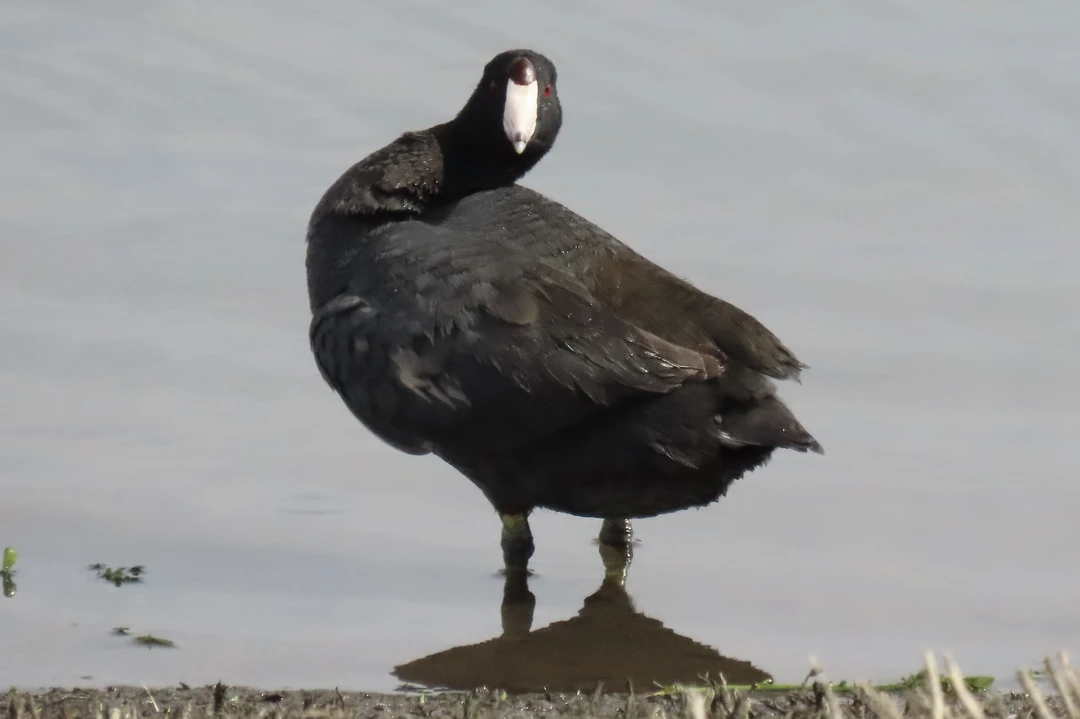
Photos of American Coot
Compare plumage, posture, and field context across this image set.
American Coot sounds
Listen to a small selection of reference recordings.
About the American Coot
The American Coot (Fulica americana) is a highly adaptable waterbird found throughout North and Central America. Often mistaken for a duck, it is actually a member of the rail family, characterized by its distinctive lobed toes rather than webbed feet. This species plays a vital role in wetland ecosystems, primarily consuming aquatic vegetation and invertebrates, thereby influencing nutrient cycling. While not holding major cultural significance in many areas, it's a common and easily recognizable bird, appreciated by birdwatchers for its unique appearance and behavior. Its adaptability has allowed it to thrive in a variety of wetland habitats, even those impacted by human activity.
Also known as: Mudhen, Waterhen, Blue Peter.
Scientific classification
Phylum: Chordata
Clazz: Aves
Order: Gruiformes
Family: Rallidae
Genus: Fulica
Species: Fulica americana
Habitat and distribution
Adaptations: American Coots possess lobed toes, which are an adaptation for swimming and walking on soft, muddy substrates. These lobes provide increased surface area for propulsion in water and prevent sinking in mud. They are also capable of diving to considerable depths to forage for food.
Variations: Several subspecies have been described, differing slightly in size and plumage coloration. These variations are often subtle and require expert examination for identification. For example, *Fulica americana columbiana* is found in parts of South America.
Distribution: The American Coot breeds across a wide range of North America, from southern Canada through the United States and into Mexico and Central America. Some populations are migratory, moving south to the southern United States, Mexico, and the Caribbean for the winter. They are also found in parts of South America. The altitudinal range extends from sea level to high-altitude lakes in some regions.
Habitat Types: Freshwater marshes, Lakes, Ponds, Reservoirs, Slow-moving rivers, Brackish coastal wetlands
Climate Zones: Temperate, Subtropical, Tropical
Diet and feeding
Primary foods: Aquatic plants (e.g., algae, duckweed, pondweed), Seeds, Insects, Mollusks, Crustaceans, Small fish
Foraging behavior: American Coots are versatile feeders, employing various techniques. They dabble at the surface, dive underwater, graze on land, and even steal food from other birds (kleptoparasitism). They often forage in flocks, particularly during the non-breeding season.
Seasonal diet variations: Diet can shift depending on food availability. During the breeding season, they may consume more invertebrates to meet the protein demands of egg production and chick rearing. In winter, they may rely more heavily on plant matter.
Specializations: Their lobed toes aid in diving and maneuvering underwater. The bill is adapted for both grasping vegetation and capturing small invertebrates.
Reproduction and lifecycle
Breeding season: Typically spring and summer, varying with latitude. Breeding may begin as early as March in southern regions and extend into July or August in northern areas.
Regional variations: Breeding season is influenced by local climate and resource availability. Southern populations may have a longer breeding season.
Courtship rituals: Courtship involves displays such as bowing, bill dipping, and chasing. Pairs often engage in mutual preening and vocalizations.
Nest Type: A bulky, floating platform nest constructed in dense vegetation near the water's edge, or sometimes on slightly elevated ground.
Nesting Materials: Cattails, Reeds, Bulrushes, Other aquatic plants
Parental care: Both parents share incubation duties, which last for about 21-25 days. Chicks are precocial, meaning they can swim and forage shortly after hatching. Both parents feed and protect the chicks. Brood parasitism by other coots and even other species is relatively common.
Fledging period: Approximately 50-70 days until chicks can fly.
Clutch Size: Typically 8-12 eggs.
Physical characteristics
Sex-Based Plumage Differences: Minimal
Length: 34-43 cm
Wingspan: 58-71 cm
Weight: 427-848 g
Lifespan: Up to 9 years in the wild, although many individuals do not survive their first year. Captive individuals have been known to live longer.
Breeding Plumage: Plumage is generally consistent year-round, although breeding birds may have brighter frontal shields.
Seasonal Feather Changes: Minimal seasonal variation.
Notable features: Dark gray to black body plumage, White bill with a reddish-brown frontal shield, Red eyes, Lobed toes (not webbed), Short, rounded wings
Interesting facts
Coots are known for their aggressive behavior.: They will fiercely defend their territories and even engage in brood parasitism, laying their eggs in the nests of other coots and sometimes other bird species.
They are surprisingly strong fliers despite their short, rounded wings.: Migratory populations undertake long journeys, often flying at night.
American Coots have lobed toes instead of webbed feet.: This adaptation allows them to walk effectively on muddy surfaces and swim efficiently.
They are known for their 'running' takeoffs.: Due to their body weight and wing shape, they need a running start across the water to become airborne.
Frequently asked questions
Are American Coots ducks?
No, American Coots are members of the rail family (Rallidae), not the duck family (Anatidae). They are more closely related to rails and gallinules.
What do American Coots eat?
They have a varied diet that includes aquatic plants, seeds, insects, mollusks, crustaceans, and small fish.
Where do American Coots live?
They inhabit freshwater marshes, lakes, ponds, reservoirs, and slow-moving rivers throughout North and Central America, and parts of South America.
Are American Coots endangered?
No, they are classified as 'Least Concern' by the IUCN, meaning they have a stable and widespread population.
Compare the image, sound, habitat, and physical characteristics together when reviewing a sighting.